“You’re progressing on something and that’s what it’s all about. You wanna keep moving, having a progress in your life.”
-Ueli Steck
All posts by running in systems
Testosterone testing, privilege, and systemic forms of oppression.
The challenges facing women in sports are many, they are systemic, and they are entrenched. A few months ago, Indian track-and-field athlete Dutee Chand was barred from competing in the Olympics by the AFI (Athletics Federation of India) because she had too much naturally-occurring testosterone in her system. She was tested for hyperandrogenism, a condition that is “characterized by excessive levels of androgens in the body.”
There are several things to point out:
- These are levels of naturally-occurring testosterone.
- There is no evidence that testosterone increases athletic performance in women.
The biggest issue with this test is an old one: women are once again being defined relative to men. What basically happened was that Dutee Chand’s body made the mistake of producing enough testosterone to enter into what is considered the “male” range—an arbitrary boundary that is based largely on observations that males tend to have certain levels of testosterone, and women tend to have lower levels of testosterone.
The idea that Chand shouldn’t compete isn’t based on any kind of science, but rather on good, old-fashioned misogyny. One of the things that testosterone does for the body is to increase muscle growth and bone mass. So, did Dutee Chand have an unfair advantage over other women? An advantage, perhaps, but certainly not unfair. Long-legged, thin-ankled distance runners have a massive advantage over short-legged, thick-ankled runners. Boxers with long arms have a similar advantage over boxers with short arms, as an Al Jazeera article points out. Athletes who have trained for a long time have had much greater levels of hGH (human Growth Hormone) in their system for a much longer period of time, than athletes that haven’t trained for so long. Does training confer an unfair advantage? No.
It seems as though the idea that women can’t have certain levels of testosterone is shorthand for saying that going beyond a certain rate of muscle growth, and going beyond a certain amount of bone mass is only for men. This is yet another iteration of that old idea that when a woman is muscular, or athletic, she becomes less of a woman. It is far more devious, (and perhaps more convincing), since it uses the language of science to gain credibility. But despite its superficial sophistication, it is merely another example of that age-old system of oppression.
As the title of the Al Jazeera article emphasizes, this isn’t just about Dutee Chand, or even just about women athletes. This event isn’t an isolated incident, and these incidents aren’t unrelated to larger, and older, mechanisms of social control and oppression. This is a reaffirmation of the same old system that challenges women’s autonomy, born from the same old idea that women are satellites to men—an idea that was carved into the Western cultural unconscious perhaps since the moment that our creation myths included the fantasy that women were created entirely from a man’s rib.
The social problems that conspire against the bodily autonomy of women are the very same ones that conspire against the athletic expression of Dutee Chand. I take such things as givens: systems thinking has taught me that there are no unrelated incidents. There are a few overarching ideas that generate the social structure all around us, on which various “unrelated” events are predicated. But to the many, systems thinking is an abstraction; an oddity. To the powerful and the systemically advantaged, it is an inconvenience.
I like to call this social system a “many-headed hydra”: Although it may seem like there is a world of difference between tests for hyperandrogenism and packs of men catcalling women runners on the street, these two are different faces of the same animal. Follow the neck, and you will see that both are connected to the very same creature: a guardian that does little else than to protect the privileges of men. These two events are absolutely related. The failure to see otherwise is often rooted in a disnterest born of privilege, or a willful ignorance born of convenience—both characteristics of that same animal, who serves only the systemically favored.
And these people, often men, often white, are so advantaged that they can afford the ultimate privilege: ignorance. The system is so tolerant of their idiosyncracies, and so devoted to satisfying their needs, that they can afford unawareness. When the lion lays around, bewildered and moderately annoyed at the antelope’s seemingly obtuse paranoia, that, in itself is proof of the very privilege that the lion enjoys and yet questions.
The prevalence of these oppressive structures has already been addressed by many, many people. This is merely one more engagement with the issue, and only within a particular topic. But it is important to recognize that what happened to Dutee Chand isn’t an athletic problem, per se. It’s a social problem, that bleeds into our conceptions of athleticism. By fixing that entrenched social problem, this athletic problem will melt into the ether. Kill the hydra, and its heads die along with it.
But one of the necessary first steps in this path is for men to acknowledge the main lesson of systems thinking: that despite the screaming objections of the privileged, and the narrowed eyes of the skeptic, the problem is and always has been a many-headed hydra. The disservice that the AFI did to Dutee Chand is a disservice to all women. But more so, it is just another example of the same disservice and oppression that occurs for all women on the street, in the home, in the workplace, in the body, and in the mind.
Understanding our own imperfections isn’t just for self-acceptance; it may help us reach greater athletic heights.
In every sense that matters, nobody’s perfect. Not physically. Everyone’s body is slightly asymmetrical. We have to keep that in mind when we train: those asymmetries are natural, and we should take them into account. Trying to create the “perfect” body—a body that is perfectly symmetrical—will mean that our bodies are less functional, because part of our biological systems will be devoted to maintaining those artificial symmetries.
A recent article discusses this at length, from the perspective of CrossFit. It makes the point that a lot of CrossFit injuries occur because of too much symmetrical training with an asymmetrical body: since we have a dominant side (larger, more powerful, more easily trained) and a non-dominant side (smaller, less powerful, less easily trained), training both sides “equally”—say, by doing barbell squats that load both sides equally—we are actually contributing to our body’s asymmetry.
We should train our non-dominant side more than our dominant side: when we get tired during a marathon, our form will collapse first on our non-dominant side. Then our dominant side will be forced to pick up the slack. Even if our dominant side is super strong, the mechanical energy is no longer translating properly from our bodies into the ground (and vice versa), eventually leading to injury.
But there’s more to this than just training. Lateral differences in people’s bodies have important effects on how mechanical energy is translated into the ground. When we run, it’s important to push off with the foot tripod (a.k.a the entire foot, with the weight on the first and second metatarsal). However, in order for both feet to do this when we have two different-sized left and right legs, the muscles of one leg need to work differently from those of the other: muscular asymmetries must be created in order to balance out skeletal asymmetries.
A right-dominant person’s right side is typically larger than their left. In the case of their hip bones this means that the right hip will be wider and longer than the left. (Their right femur is further away from the body’s centerline than their left femur). This means that the right foot is prone to evert (rotate outwards) more than the left. Supposing that the right foot pushes off correctly (with the entire foot tripod firmly planted), the left foot is likely to naturally underpronate during the swing phase, which means that this foot is likely to push off with more weight on the outer metatarsal bones.
In order to make the pronation (and therefore the pushoff) equal between the left and the right foot, the relevant hip muscles (usually hip abductor muscles) at the left hip, leg, and lower leg must be correspondingly stronger than those on the right side.
You see this happen in a lot of elite athletes, from Buzunesh Deba’s right leg swing to Haile Gebrselassie’s right arm swing (seen best at 1:47). During the swing phase, Deba’s right leg rotates inward slightly more than her left leg (and her right hip is consistently higher than her left). Similarly, Haile’s right arm ends the upswing with his hand just above the collarbone, while his left hand ends up just below. (These asymmetries are very slight because both these athletes have a very clean gait). Possibly, these athletes’ muscles are pulling asymmetrically in order to compensate for slight asymmetries between their right and left sides. These seeming imbalances allow their legs and feet to translate the mechanical energy generated by their bodies into the ground in the most efficient way possible. Trying to “correct” these asymmetries would likely result in a reduced athletic output.
Deba’s and Gebrselassie’s bodies are quite simply done pretending that they’re symmetrical. Neurologically, muscularly, and skeletally, their bodies are quite in touch with their own imperfections.
I’m making a case for self-awareness and self-acceptance. And I’m certainly not saying that self-acceptance will magically grant you good biomechanics. But biomechanical acceptance isn’t that far removed from the physical acceptance we need when we look at our bodies in the mirror. Not really.
None of this means that “perfect” symmetry is the ideal situation. Dominance is something that happens naturally, in order for us to be able to move the body asymmetrically. Having a dominant hand is far from a drawback: it allows us to write, paint, or to throw a javelin. Neurologically speaking, dominance lets both hemispheres of the brain provide greater computing power to a single extremity, resulting in much finer movement, and much greater skill.
Furthermore, the organs of the body aren’t arranged perfectly symmetrically: the heart is slightly on the left side, and the liver is on the right, for example. Because of how the body is organized, weight is distributed in odd places. More blood reaches some parts of the body than others, and dominance means that the touch, and proprioceptive receptors of some areas of the body are getting far more stimulation than others. The body grows differently in different places, and that’s a good thing.
But some of the most important movements we can make harness the body’s symmetry: running and walking. We somehow need to reconcile the need for symmetry with the need for asymmetry. Because each of us are different in different ways, we each reconcile those needs differently.
It’s not easy to reconcile these things. When we don’t have a lot of experience moving our bodies, our neuromuscular system makes the computationally simplest assumption: that both sides of our body are identical in length, width, height, and weight. It takes the brain a lot of data mining (from a lot of training) for our mental map of our bodies to include our biomechanical quirks and musculoskeletal idiosyncracies.
Training isn’t just about self-improvement. I believe that, above all, athletic excellence is about self-knowledge. Firsthand knowledge of our bodies leads to better, safer, and more efficient training. But it can also lead to a much better athletic experience, with much greater personal satisfaction.

Can everyone run?
A few weeks ago I was pulled into a conversation about running in La Paz, Mexico. I was asked incredulously by a good friend whether running was for everyone. In honor of the Baja 1000 off-road race, which recently concluded in La Paz, I answered with this:
“In order to run properly, a lot of us have to shake off the rust, change a few parts, and do some major tune-ups. And even though a few people out there are trophy trucks, every last one of us is at least a Jeep.”
Only one person can win the Boston Marathon every year, but (barring severe injuries and deformities), every one of us can aspire to run a marathon with the certainty that we will finish the race as healthy as we started it.
Shout out to the Vildosola family and racing team: good friends and constant winners of the Baja 1000.
Running “correctly” will mean different things for different people—up to a point.
Next time you go see a marathon, go look at the elite runners—and then look at everyone else.
You’ll see that elite runners run like little toy soldiers: although they have different body types, their running forms are all nearly identical. The further back you get in the pack, the more “variety” of running strides you’ll see. In other words, across all humans, there is a specific recipe for speed.
Our bodies are all different. Some of us have big feet and short calves, others have long calves and really short arms. When a runner has really long legs but small feet, it becomes really easy for the knee joint to open and close: even though the feet are far away from the hinge (the knee joint), it doesn’t take a lot of power to move them because they don’t weigh very much.
In comparison, a runner with short legs and big feet might use the same amount of energy to open and close their knees. This short-legged runner is at a disadvantage, however: shorter legs means that they cover less ground with each gait cycle, meaning that more energy is expended across the same distance.
However, these differences don’t mean that different runners should use different stride types or different body positions. Achieving a “correct” stride will mean that for one runner, the parts of their body will be at certain angles relative to each other, while for another runner, those angles will be slightly different.
But our bodies all express strength in the same way.
For example, let’s suppose that somebody has a really short abdomen but a really long chest. This person may be inclined to hunch down to lift a heavy object, instead of bending their knees. For them, it may be simpler to stretch and contract the longest part of their upper body, their chest, instead of bending their knees, which is what they should do, mechanically speaking. In other words, this person has to work much harder to develop the muscles that hold their lower spine rigid (back extensors, illiopsoas), in order to safely be able to perform this maneuver. But despite these differences, the only mechanically feasible way to lift heavy objects is by bending from the knees.
Similarly, there is only one mechanically feasible way to run: by forming a smooth, unbroken arch from the base of the head to the ankle of the leg that’s pushing off the ground. This arch can only be formed when there is a very pronounced knee drive with the opposite leg (which means that the knee continues to be fully flexed at the end of the swing phase).
Because of individual differences such as those mentioned above, certain runners will have to work a lot harder than others at developing certain muscles, in order to create this continuous arch.
In my case, I have short legs, a short lateral arch (of the foot), and a long medial arch. Without going into the nitty-gritty details, this means that it is very easy for my foot to supinate too early in the running stride. Note that this does not mean that I am “a supinator”—or whatever. This means that my anterior compartment (hip abductors and hip flexors) has to be significantly more powerful than if I had longer legs and shorter feet, in order to maintain a midfoot strike while still using the entire foot tripod for pushoff.
My body has to work harder to keep my foot “more” pronated, and my leg “more” everted, throughout the running stride, because the muscles that cause my foot to supinate are longer (and therefore get powerful more easily) than the muscles that cause my foot to pronate.
This means that the “untrained” version of my body (without a strong anterior compartment) wants to overstride. Why? Because in order to push off with the entire foot tripod, my body wants to start the contact phase when my foot is at its most pronated. In other words, because I supinate early, my body wants my foot to contact the ground early—and the easiest way to do that is by overstriding.
Furthermore, the only way for that untrained version of my body to midfoot-strike is by contracting the soleus muscle early in the contact phase. In order to go from the contact phase to the stance phase, my ankle has to dorsiflex. But because the soleus was already contracted, it has to work eccentrically in order to allow for this dorsiflexion. This form of midfoot striking put a huge eccentric load on the soleus, which means that my calves can get really really tight really fast if I don’t work heavily on strengthening my anterior compartment.
When I first started running for real, that’s exactly how the story went. My calves were chronically tight, and the answer to that was in developing my frontal compartment. Although different people may have to develop slightly different muscles (for example, someone may need a quadriceps muscle whose lateral head is relatively more powerful than the medial head), the answer for basically everyone who overstrides, or has posterior muscle tightness, is to strengthen the frontal compartment in some fashion.
My end goal was to create a particular structure—a structure which can hold a lot of tensile force, which is firm yet mobile, and which is correctly aligned relative to the force of gravity. As I mentioned above, that structure is a smooth, continuous arch from the base of the head to the ankle. Going about the process of creating that means something slightly different for me than it does for anybody else on the planet.
But nobody will be the most resilient (or fastest) version of themselves without first creating that arch.
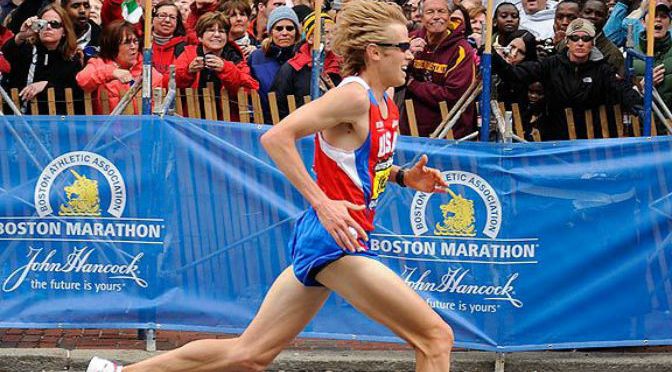
A few ideas for generalized injury-prevention for runners.
As I often discuss here, I don’t believe that injury-prevention should be put in a different category from athletic training. Injury-prevention isn’t something you should do on the side. It should form an integral part of your training. Why? Because injury-prevention is all about resilience, and as far as the human body is concerned, resilience means using more muscles to achieve the same task.
It doesn’t matter what athletic discipline you practice: running, golf, or martial arts. The more of your body that goes into whatever movement you’re doing, the better off you’ll be. And that means one thing above all others: use more muscles.
That’s why a lot of injury-prevention websites for runner’s knee focus towards working the small muscles—gluteus medius, hip adductors, foot dorsiflexors—a.k.a. all the neglected ones. By putting all of these muscles in play during athletic activity, the body not only becomes more resilient, but more powerful.
In other words, the more resilient you can make your body, the more powerful it will be.
So how can we apply this to running?
One of the main problems most runners experience is that the posterior muscles (calves, hamstrings, glutes, back extensors) become too developed, since they have the most vital functions in the running stride: the first is concentric—extending the leg and back to push against the ground. The second is eccentric—arresting the body’s forward lean so that the runner doesn’t crumple forwards. With a few exceptions, the anterior (frontal) muscles main function is to work opposite to the posterior muscles, in order to allow the runner to lift the leg forwards during the swing phase.
(Think of it this way: muscles at the back generally move body parts backwards, and muscles at the front generally move them forwards).
This means that the most common form of muscle imbalances, which often lead to lateral knee pain and other ailments, are rooted in a dominance of the posterior muscles over the anterior muscles. The most basic thing that any athlete can do, for the purpose of preventing injury—and making their running stride more powerful as a side-effect—is to develop the anterior muscles so that they can move more powerfully.
Given all of this, injury-prone athletes should focus on exercises that strengthen the anterior muscles:
- Sit-ups that emphasize balance through core activity (such as those shown in this video).
- Because the gluteus maximus—the most powerful posterior muscle—works not only to extend the thigh but to abduct it (rolling it away from the body), it’s necessary to work on the adductors (which roll the hip in), in order to balance out these muscle groups. Leg/Knee raises help address this. The closer you bring the legs towards the chest, the more you will emphasize the inner abdominal muscles (such as the illiopsoas), as well as the hip adductors.
- Hanging leg lifts. Doing it with straight legs works the obliques of the core and thigh.
- Bicycle crunches are also amazing for balancing all of the core/hip muscles.
- This exercise is great for strengthening to frontal calf muscles.
Even though running is all about triple extension (of the hip, knee, and ankle), you need to be able to flex those joints, in order for your extension to have a greater and greater range of motion. The stronger your posterior muscles get, the more you’ll find yourself “staving off” muscle pain by stretching. The ultimate answer is to strengthen the anterior muscles, so that they can interact properly with the posterior muscles.
For a sport like running, you can count on the posterior muscles to take care of themselves. It’s the anterior muscles (and obliques) that you have to worry about. I love this quote by The Gait Guys, which captures all of this in one simple thought:
“Develop anterior strength to achieve posterior length.”
The human body is an athletic machine.
A growing body of evidence is telling us that exercise is one of the most important ways to prevent all sorts of chronic diseases. This list includes (but is not limited to) various cancers, diabetes, clinical depression, and osteoporosis.
Although we could just leave it at that, and say “exercise if you’re chronically ill,” we can take this evidence a little bit further: it tells us something very important about the relationship between exercise and the human body.
What chronic diseases mean for the body is that our systems aren’t resilient: the very same problem springs up again and again, and our body has los the capacity to change that. Because by exercising, we can reduce the risk for these diseases, this tells us something about the optimum state of the body: when we don’t exercise, our risk of chronic disease begins climbing. When we don’t exercise, our bodies stop being resilient. This means that the body’s resilient state is one in which it’s constantly exercising.
There is another growing body of evidence that suggests that cognitive flexibility and neurogenesis (the creation of neurons and neural pathways) increases during exercise. This means that, both physiologically and psychologically, exercise increases the body’s capacity to deal with new, novel, and unexpected stresses. Simply stated, exercise helps the brain and the body meet the demands of the world on the world’s own terms.
Thanks to this evidence, we can infer something about the body: if the human body and human mind’s resilient state corresponds to a state of constant activity and exercise, then the body isn’t meant to be passive, at rest, and unchallenged. The human body’s baseline state is one of exercise—one where it’s being constantly challenged physically, physiologically, and mentally.
In other words, the human body is an athletic machine.
This conclusion tells us something very interesting: the prototypical western, sedentary human doesn’t reflect the optimum state of the human body. And to snuff out a possible counterargument before it arises: we haven’t “evolved” out of the athletic roots that were so important in our early history and prehistory. Socially, we may be an entirely different animal (although many, myself included, would argue against that—we are as reactive, addictive, violent, aloof, and oppressive as ever). But physiologically and psychologically, we’re basically the same. If we had in fact evolved beyond those athletic roots, exercise would have no causal relationship whatsoever to chronic disease.
Which in turn opens up a very interesting line of inquiry: the pool of subjects used when we move new cures and treatment methods into human testing is highly skewed: we test these methods and cures on a population that, while ostensibly representative of the western, sedentary human, is not representative of the ideal—i.e. resilient—state of the human biological and psychological system.
What this basically does—and has done—is to get us into a mindset where prevention doesn’t exist, and cure is the only option. In systemic terms, prevention means increasing the resiliency of the system. Once that system is resilient beyond a certain threshold, there still may be some ailments that need curing. But when the prospect of increasing resilience is completely off the table—or worse, marketed as an “alternative,” and not as the necessary first step towards a solution—everything needs curing.
Running quote of the day
“I like to take advantage of what the mountain gives me all year round, so when I can’t ski, I’ll just go run, and vice versa.”
– Kilian Jornet
On the importance of the Internal Obliques.
I just read a very interesting article on the importance of the internal obliques for the walking and running gait. Here’s a tidbit:
If you don’t own your obliques, you don’t own walking. If you don’t own walking, you don’t own movement. If you don’t own movement, you don’t own your spine. It’s that simple.
When the gluteus maximus (butt) muscle isn’t working well, the internal obliques sometimes take over the task of extending the hip. This compensation pattern can devolve into a series of other musculoskeletal problems. The article makes some key observations:
- Since the internal obliques (quadratus lumborum) control the deceleration of the spine’s rotation, they are instrumental in maintaining spine stability and avoiding injury.
- One of the hallmarks of oblique weakness is that people stop breathing when performing simple movement patterns to maintain stability. (This makes it essential for runners to focus on oblique function; incorrect breathing patterns and/or an inability to change them may be rooted in oblique weakness).
- Because spine rotation is essential for gait, improperly-functioning obliques will impair the production and absorption of mechanical energy.
It’s always important to remember that a particular dysfunction has repercussions all over. Oblique functioning isn’t just about spine stability or just about breathing, or just about production and absorption of energy. A dysfunction in any one system has repercussions on many levels in a dynamic system like the body.
The “heel-striking” running gait doesn’t observe the requirements of the human body’s mechanical paradigm.
Those who say that the midfoot strike is the “ideal” running stride often conclude that midfoot striking is “better” for a variety of reasons. One of those reasons is that, allegedly, the midfoot strike is more “natural” than the rearfoot-strike (also known as the heel-strike).
It’s a bad idea to call the midfoot strike more “natural”—aside from the fact that the allegation is wrong: humans use a variety of different footstrikes for a variety of different activities. Rearfoot striking ahead of the center of gravity is the default walking strike. Rearfoot striking is also used to abruptly halt forwards momentum, and sometimes, to turn by using the heel bone as a pivot. Conversely humans use a very anterior (forefoot) strike during the acceleration phase of sprinting.
In short, the problem with this “natural” argument is that human feet strike the ground all over the foot map.
So stop calling it natural.
Which is why I prefer to adopt a more technical term: paradigmatic function. This term means that a certain function X is more in line with a particular structure, or a particular configuration of a structure.
For example, variable-geometry aircraft—those which have the ability to “sweep” the wings back from an extended position to create a triangular shape (such as the F-14 Tomcat)—use the swept-back configuration for combat and supersonic flight, while they use the extended (regular) position for takeoff and landing. For the F-14 Tomcat, the paradigmatic function of the extended configuration is takeoff and landing, whereas the paradigmatic function of the swept-back configuration is combat and supersonic flight.

Although it is no doubt possible for the F-14 to land with the wings swept back and enter combat with the wings extended, there are two things to consider: (1) each configuration works better for each activity, meaning that (2) each configuration “solves” a different problem: the swept-back configuration allows for greater maneuverability and speed, while the extended configuration allows for greater stability and reduced speed during landing.
Central to systems thinking is the idea that every system (or configuration of a system) is built to solve a particular problem. For example, a system with a branching structure, like a tree, a lung, or a network of roads, solves the problem of getting the maximum amount of energy or nutrients to and from various places with the least amount of effort. The shapes of systems always correspond to the most parsimonious way to solve a particular problem. In a very real way, you can think of all systems—and each individual configuration of those systems—as solving a problem that is specific to each system or configuration.
The very same goes for walking and running, the two important gaits—the two functional configurations—of the human body.
Although it would seem easy to say that these two functional configurations are “walking” and “running,” it’s better to get at this conclusion in a more roundabout way:
In terms of the stresses absorbed by the body, the most important difference between walking and running is that in running, there is a flight phase, while in walking, there isn’t. This means that one of the things that the body needs to do while running is absorb the shock of landing, while in walking, this particular need is largely absent.
This theory is largely borne out by looking at the muscles used during walking: the largest muscles in the body—the gluteus maximus, the psoas major, and the hamstrings—are largely inactive.
Because of this, the knees remain locked during the walking gait. This means that by walking, the body “solves” the problem of preserving energy while remaining in motion; that’s what the walking configuration is for.
Because a necessary component of running gait is the absorption of shock, the landing portion of the running stride should incorporate a shock-absorbing motion. So, in order to figure out what kind of motion comprises the landing portion of the running stride, let’s review what a “purely” shock absorbing motion looks like: landing from a jump.
When we land from a jump, our hip and leg mechanism works largely like a shock-absorber: we land on our midfoot or our forefoot, and all the joints of the lower extremity go from a lot of extension to a lot of flexion in less then a second, meaning that the hip, knee, and ankle all flex together. (This is known as triple flexion). This means that the paradigmatic function that the body uses to absorb shock is triple flexion. Similarly, in order to jump again, the body extends the hip, the knee, and the ankle simultaneously (which is known as triple extension).
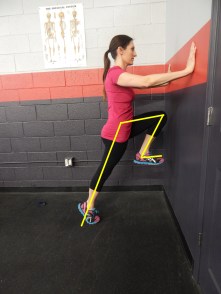
In order to create triple flexion and triple extension, the body must recruit the largest muscles of the body, including the hamstrings, gluteus maximus, psoas major, and quadriceps. In other words, the triple flexion/extension configuration solves a very different problem than the one solved by walking: it allows the body to safely absorb the energy of impact, while powerfully exerting force against the ground.
Because running necessarily has a shock-absorption component and a takeoff component (because of flight time), it stands to reason that, during running, triple flexion and triple extension should form an integral component of the contact and pushoff phases (respectively).
This is where it gets problematic. The typical heel-strike (overstriding with initial rearfoot contact) plays out very differently from triple flexion: as the foot strikes the ground, the knee is mostly locked but the leg is stretched out in front and the foot is raised. The hip is in flexion, the knee in extension, and the ankle in flexion. This means that the shock absorption capabilities of the leg are reduced—and because the leg flexes less, it has a lower capacity for pushoff.
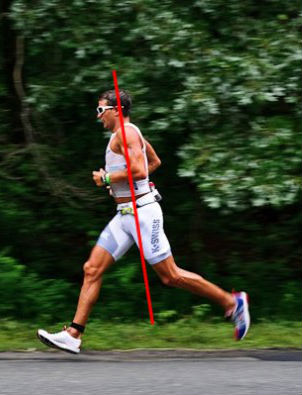
(The lower achilles tendon loading of heel striking as compared to forefoot striking may attest to this).
I’ll leave the issue of heel-striking under the center of gravity for another post. For a taste of why it might be problematic, try jumping up and down in the same spot while landing on your heels. It’s extremely difficult.
In contrast, the midfoot/forefoot strike is a great example of the triple flexion/triple extension principle at work: When you land on your midfoot, your leg compresses like an accordion: the ankle, knee, and hip create a zig-zag shape, which straightens as you push off. Midfoot striking adheres strongly to the musculoskeletal configuration used for shock absorption/propulsion movements.
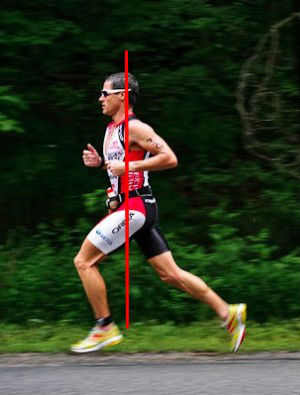
In my opinion, the best way to know if you “are” a heel-striker in some essential sort of way is to jump up and down, and to see if it is easier for you to absorb shock by landing on your heels than by landing on your midfoot or forefoot. (Unlikely). If that isn’t the case, and yet you heel-strike while running, it might be time to look at muscular imbalances and power leaks, particularly in regards to muscular interactions at the hip area (illiopsoas, lower back extensors, gluteus maximus, quadriceps, and hamstring).
And then, embark on the long road of responsibly changing your gait.
 running in systems