All posts by running in systems

The Overlooked Mystery of Movement, Unlocked: My experience with the Pose Method Sports Technique Specialist Certification

Movement isn’t generated by muscles.

This is the central theoretical point made by Dr. Nicholas Romanov, founder of The Pose Method, when teaching movement. He points out that the similarities between all the different human movements—swimming, walking, pitching, kicking—run deep, while the differences (which we naïvely believe are the larger part of the equation) are actually astonishingly superficial.

Dr. Romanov makes a critical distinction between movement—the displacement of our body in space (or of another object, such as a ball)—and repositioning (moving arms, hands, legs or shifting our torso around while remaining in the same spot).

Muscles allow us to reposition, sometimes at great speed. But in order to transform repositioning into movement, we need to add another critically important (and almost universally overlooked) component to the recipe: gravity.

Similar to how animal physiology evolved with the assumption that oxygen is a constant, the movement mechanics of all animals evolved with another assumption: that gravity is another constant, which we harness for movement as we harness oxygen for life.

Leonardo Da Vinci wrote: “Motion is created by the destruction of balance.”

What happens when we destroy balance—when we lean juust enough in some direction (say, forwards)? Gravity accelerates us quickly enough that we reflexively throw our foot down to catch ourselves in an attempt to find balance anew. And what if instead of stopping, we let ourselves continue falling? We’ll find that we need to throw down another foot, and another, and another. At that point, we’re running.

All movement begins with the destruction of balance, but there are an innumerable amount of movements that the body can make. The difference between each and every one of them is which position we initiate from.

But how about in throwing? Isn’t it quite clear that we “generate power” from the hips? Let’s see.

We all know the throwing stance: ball in hand at the level of the ear, elbow at ninety degrees and square with the shoulder, back foot pointing to the side and front foot pointed forward. But there’s more. We rotate our shoulders so that they are aligned in the direction of the throw.

quarterback

Our upper body is essentially twisted into a spring, ready to snap back around as soon as we release the potential energy we’ve created.

But in order for this to become a throw, there is one exceptionally important component missing—an action called unweighing. If there’s any shared movement between all sports, this is it. Unweighing is essentially an explosive shoulder shrug—the idea behind it being that initially it’s much easier to reposition a structure like the shoulders (which aren’t weighed down by something on top of them), and then follow in sequence with torso, hips, legs, and feet (which are).

Unweighing happens in a big way in this video of Drew Storen’s pitching mechanics, as well as in just about any video of Usain Bolt.

Once you’ve unweighed, your shoulders are flying. For all intents and purposes, they’re suspended in air. The abdomen isn’t supporting the shoulders anymore. The spine is free to extend, and accelerate the abdomen into the air. Your hips, knees, ankles, and feet are free to move.

Unweighing is the necessary first step to any human movement. While movement is still possible without active unweighing, performance suffers.

But remember, unweighing isn’t the only component: throwing involves a forward step—a momentary loss of balance. With it, gravity gets the perfect opportunity to accelerate our body. The bigger the step, the bigger the acceleration.

“The object which moves most rapidly is farthest from its balance.”

—Leonardo Da Vinci

Movement is in no way “accidental” or “passive” just because gravity is involved: A bigger “fall” in running or throwing means that the appropriate muscles have to contract more quickly in order to negotiate the greater acceleration and help the body travel to another balanced position—a second Pose.

When that foot lands, our leg stops moving abruptly. Milliseconds later, our hips, shoulders, elbow and wrist each come to a stop—and all that kinetic energy gets transferred into the ball, which continues to travel at great speed.

In throwing as in running (as in jumping, punching, and even swimming), every athletic movement is instigated by a loss of balance.

Let’s explicitly state the counterintuitive elegance of Dr. Romanov’s Pose theory: the variety of athletic movements isn’t due to a different “action” or “effort,” but rather that the initial position—the Pose that we lose balance from—and the ending position—the Pose that we travel to in order to regain it—are different.

For any movement, exactly two things happen between Poses: acceleration in some direction due to the force of gravity, and our single voluntary contribution—our only action: an explosive “unweighing” that allows the body to quickly (and reflexively) reposition its parts in its quest to return to balance.

Implicit in Pose theory is this notion: the best way to teach movement isn’t by teaching movement. The way to teach movement is by teaching the initial and ending Pose, teaching how to unweigh, and finally by teaching the conscious mind to let the body do its thing—to get the hell out of its way.

As Bruce Lee once said: “. . .and when there is an opportunity, I don’t hit. It hits, all by itself.”

Embracing The Individual

Keith Begley's avatarElite Performance Psychology

Too often, team sports managements disenfranchise young players or potentially good players by treating them like pieces of meat. For too many coaches, If they are not up to making the first team, they are not important. It is important to remember that athletes (especially young ones) develop at different rates. A weak 12 year old could be an excellent 18 year old if given the opportunity, encouragement and support.

One of the main predictors of player retention is how one is treated by their coach. Whether you are a star player, a good player or a bad player, everybody wants to feel wanted and loved.  In fact Danish child psychologist, Abraham Maslow referred to this in his famous child psychology development model; his “hierarchy of needs” (1970). This transfers and applies to sport also. Other posts relate to a positive type of leadership in sport a coach…

View original post 496 more words

QUESTION FROM A READER: Why does my heart rate spike at the start of a run?

A lot of people who run with heart rate monitors often see their heart rate spike at the beginning of a run, only to subside after a mile or two. This kind of spike only happens if you didn’t warm up long enough.

  • If the body isn’t warmed up, there is little blood flow to the muscles (and therefore little oxygen).
  • For a short period of time, the muscles have to work anaerobically, increasing the heart rate.
  • The body rushes to shunt blood away from the organs and towards the muscles. This is a major stressor.
  • The spike in heart rate subsides when increased blood flow (and the oxygen that comes with it) allows the muscles to work aerobically.
  • Therefore, the spike itself is an indicator that your heart rate was inadequate.
  • It takes 12-15 minutes for the body to warm up properly.

Before starting a bout of exercise, our body’s internal machinery is largely inactive. The metabolism is working at a very low level, the big muscles are relatively quiet, and blood is moving largely within the core—cycling through the various organs, and back to the heart and lungs.

Muscles are fed by vast networks of capillaries—tiny blood vessels existing within the muscles themselves—which ensure that blood goes to and from every muscle cell. During rest, the majority of these capillaries are constricted. Very little blood goes in or out of the muscles.

This eases the demand on the heart during rest: constriction of the capillaries and peripheral blood vessels means that the overall volume of the cardiovascular system is greatly reduced. The heart doesn’t need to pump very hard to maintain blood pressure, which keeps the heart rate relatively low.

During exercise, muscles demand a huge volume of blood flow, and so the capillaries dilate to accommodate it. But the body isn’t designed in such a way that the capillaries can expand pre-emptively. They expand due to exercise itself. Asking the body is asked to exert itself from a cold start can be a major stressor: it has to drain blood from major organs abruptly and it has to shove them into muscles whose capillaries haven’t dilated yet—a process that can send the body into shock.

Because of this, a proper warm-up—a period of very low-intensity activity—is important for all exercise, but is critical for running: Every step we run, our legs have to break our fall. It takes a big use of the muscles to make this happen.

Without proper blood flow, the muscles are on their own. If the capillary networks haven’t yet expanded, very little blood is getting to the muscles for those first few minutes. This is a problem because blood carries oxygen. No blood, no oxygen. But even without oxygen, the muscles still need to find a way to perform the required activity. In this situation, the only way to accomplish this is by working anaerobically.

I’ve written before how anaerobic work is intricately tied to the stress response: when the body is under stress, it raises the heart rate and kicks up the functioning of the anaerobic system—which is able to provide energy at a massive rate—in order to deal with a presumed threat to its existence. The connection between stress, anaerobic activity, and a high heart rate runs deep: if any of the 3 increases, the other two will follow.

The observed spike in heart rate is a direct indicator of increased anaerobic activity.

It subsides after a mile or two is because it typically takes the aerobic system 12-15 minutes to activate completely. Blood finally pervades the muscles, bringing oxygen and allowing the aerobic muscle fibers to do their thing.

Heart rate drops to a manageable level once the aerobic system is in play—and to the degree that it comes into play.

Here’s the important part: A spike in heart rate doesn’t just tell us that our aerobic system wasn’t fully on yet. It also tells us that our warm-up was inadequate. The spike in anaerobic activity means that blood and oxygen was largely absent from the muscles. The body was forced to rush to bring blood to the muscles. Blood was hastily drained from the organs, and unceremoniously shoved through capillaries that hadn’t yet expanded to accommodate it.

That amounts to a lot of unnecessary stress.

The solution: warm-up for longer.

Why Sonny Bill Williams handed the medal to the child – All Black Culture

Keith Begley's avatarElite Performance Psychology

sonny bill

In what is considered to be one of the greatest acts of sporting humility, Sonny Bill Williams gave his winners medal to a young child after he was tackled by a steward when he ran onto the pitch to greet his heroes after the Rugby world cup in 2015.

People all over the world were mesmerised by the act.

When the All-Blacks come together, high standards are expected. Gilbert Enoka has been their mental skills coach for a number of years. There was a period when becoming an All-Black granted poster boy status for the newcomers. That was a time when the All-Blacks couldn’t win the world cup despite having the talent to do so. Enoka’s influence extends far beyond his job title as mental skills coach and Wyatt Crockett, the loosehead prop, says the squad view Enoka as the custodian of their culture and a huge part of them winning…

View original post 1,285 more words

“Narrowing your life” to reduce injury risk.

A while ago I wrote a popular article on a contentious topic: I posed the question of whether “being a slow runner” was a protective measure against having bad running form—in other words, whether people are artificially lowering their injury risk by semipermanently limiting their athletic horizons.

I wrote this as an answer to the many experiments out there that find no link between incidence of injury and running form (or type of footstrike, etc). An underlying claim of my article is that perhaps the reason that experiments find no connection is that the incidence of injury caused by “bad form” has been artificially reduced by runners slowing down in order to reduce the force dished to their bodies. The implication being, of course, that if they had good form, they would be in a position—literally, an alignment—that would allow their body to correctly, and therefore efficiently, interact with those forces. In that sense, good form may not reduce injury risk itself, but it will create faster runners.

In other words, I think it will reduce injury risk—at a given speed X or given distance Y.

I’ve made no secret of what I believe “good alignment” or “good form” to be.

I bring this topic up again because of a comment made by Gray Cook, movement expert and founder of Functional Movement Systems (FMS), on the topic of exercise, alignment, and injury risk:

“What you’re going to do inherently to manage your injury risk . . . you’re going to find yourself limited, and you’re going to migrate to those abilities that don’t cause you a problem. And you’re going to lower your injury risk by narrowing your life.”

The full video is 9 minutes long, and the quote is from the beginning of minute 8.

Understanding the gears of the human drivetrain: energy systems and some of their training and racing applications.

Not long ago, I read an article from Outside Magazine which mentioned an elite cyclist who eschews heart rate monitoring during training in favor of power meters because “power is objective.” While I like power meters and I think they are an important tool in our (presumably much larger) athletic toolbox, I take issue with this view.

While a power meter tells us exactly how much power the body is putting out, it doesn’t tell us a lot about how the body is arranging for that power to be produced. That’s a problem.

The body has 2 main energy systems, both of which are used in varying amounts during a bout of activity: a capability to create energy by breaking down glucose, or sugar (call this “LO gear”—producing the low-end torque needed for power and acceleration) and a capability to create energy from lipids, or fat (call this “HI gear”—producing the high-end torque necessary for endurance). LO and HI gear can be subdivided into more energy systems—ATP-PC, anaerobic glycolysis, glucose oxidation, fat oxidation, and ketosis—but I believe that the beginner (particularly the beginner distance runner) should first master the distinction between fat and sugar usage, and how to apply it concretely to training and racing.

As I’ve discussed before, our heart rate is hardwired to our stress levels (a.k.a. the intensity at which our body is operating or expects to operate), and therefore to whether we are breaking down sugar or breaking down fats—in other words, which gear we are using at any given time.

The higher our heart rate, the more we are using the LO gear necessary to produce lots of power. The lower our heart rate, the more we are utilizing the HI gear necessary to sustain activity for protracted periods of time.

This doesn’t mean that we are burning the most fats when our heart rate is lowest—it just means that the greatest percentage of our energy comes from fats. By increasing our heart rate from its lowest point, we increase the amount of fats burned until the requirements of the task (as reflected by the heart rate) are high enough that a threshold is crossed—and the body is forced to switch to sugar in order to produce the necessary power.

(My favorite way of estimating at which point your body is most likely to switch from HI gear to LO gear is Phil Maffetone’s 180-Formula.)

Consequently, the problem with the power meter is that it doesn’t tell you whether the body is getting this energy from LO or from HI. The issue is simple—and it’s the very same one you would have if you’ve ever tried to go on a long roadtrip with a car that doesn’t shift up above second gear: you’re going to run out of fuel, blow the engine, or both.

During a marathon, just like during a road trip, your success depends on how well you’ve developed HI gear. Nobody argues that power (from LO gear) is incredibly important in a marathon—I often quote Owen Anderson, author of Running Science, who (in my opinion) famously said that “the marathon is a power race.” But the ability for you to get to the finish line (which is a precursor to racing to the finish line) is predicated on how well you developed HI gear.

“Hitting the wall” is a ubiquitous experience in the running community. I myself have hit the wall a dozen times. It’s almost a rite of passage—the badge of a “true” endurance athlete. It also means that muscle glycogen (a.k.a sugar) was depleted too soon: the runner was utilizing LO gear too much, and ate through all its fuel.

(HI gear—“fat-burning,” loosely speaking—draws from a massive fuel source. A 150 lb marathoner with 12% body fat has some 45,000 calories in the tank. LO gear has perhaps 2,000.)

Supposing that 60% of entrants at any given marathon are hitting the wall—although it wouldn’t surprise me if the real percentage was far higher—there is an epidemic of runners who despite their best intentions and best efforts, either (1) have not developed HI gear well enough, or (2) do not understand how to pace themselves in order to use just enough LO gear to go fast but not enough that they bonk at the halfway mark.

How do we factor this into training?

Let’s use the most classic bit of marathon training as an example: the long run. Since the marathon is a HI gear, fat-burning race, then we have to make sure that our long run is being fueled primarily by HI gear.

Suppose that some runner X has enough glycogen stores to fuel LO gear for 14 miles. If she’s been using LO gear to fuel the majority of her efforts up to the 14 mile mark, then she hasn’t really used HI gear to run even 1 mile.

This marathoner doesn’t really have a robust, well-developed HI gear to switch to. For her, a 14 mile run and a 16 mile run are extremely different experiences. The 14 mile run can be performed well with a powerful LO gear, but as soon as she bumps the distance up to 16 miles or more, her speed will drop dramatically—particularly towards the later miles.

(Marathon pace for the elite runner is only a few seconds per mile slower than half-marathon pace. In contrast, marathon pace for the recreational runner may be a third slower than half-marathon pace).

The problem isn’t that she hasn’t trained the mileage itself, but rather that the energy system that is supposed to handle high volumes of mileage was never really developed—so when she bumps up to a mileage that requires that fat-burning energy system, she grossly underperforms relative to her expectations.

Considering how many marathoners hit the wall, I believe that most of us don’t train HI gear on most of our long runs. This doesn’t mean we shouldn’t train LO gear or run long and fast in preparation for a marathon. It means that we need a reason for doing so—and we need to know when we’re crossing the threshold. Power meters aren’t enough. We need heart rate monitors: we need a window into what’s happening inside our body in real time.

Shoulder (T-Spine) training for runners: Completely overlooked, and absolutely necessary.

The benefits of lower-body training have always been obvious for runners. For the past few years, we’ve seen that the ill-defined and ill-understood “core” has come into its own as a legitimate focus of attention for runners who want to better their athletic situation.

The shoulders are just as important as the core—and yet almost completely neglected.

Most of us who are a little bit studied in the science of running know that arm swing is largely passive—a way for the body to contralaterally balance the movement of the legs. So why should we even worry about the shoulders?

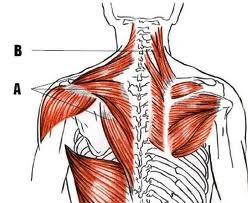
We should care because of how they are connected to the body and how they affect the areas around them. The shoulder region is also known as the “T-Spine”—the T-shaped structure created by the backbone, the shoulder blades, and the collarbone (and of course, the hugely complex array of muscles, tendons, and ligaments that contribute to its function).

If any one of the muscles implicated in T-spine function is impaired, functionality of the entire structure goes down the drain.

scap-muscles

Developing T-Spine functionality is important not only because the shoulders and arms are part of the body (and are needed for running well) but because in that immediate vicinity is the ribcage—and the ribcage houses the lungs and the heart, which are the main facilitators of the aerobic system (a.k.a. the distance runner’s main engine).

Bad T-spine function isn’t isolated to runners—it’s one of the biggest motor problems in the general population. In this sedentary world, our brains never had to understand how to use this complex (yet astonishingly elegant) interface between the arms and the torso.

Think about what happens when someone has bad general stability (they are “klutzy”), and their stability is challenged by walking on a balance beam or a raised log: they tense up and are unable to complete the task—or alternately, grossly underperform relative to someone with better motor control.

The same thing happens to the T-spine, particularly in a dynamic, repetitive-impact sport such as running. (Imagine, if you will, the same log or balance beam shaking repeatedly).

When faced with this kind of challenge, any impairment in function causes the T-Spine to seize up and refuse to move.The arms stop being able to swing freely. The “natural” arc that the arms would follow passively (if there was total freedom of movement) gets altered. Because the arm swing directly counterbalances the movement of the legs, either the legs move differently to match the different arm-swing, or the movement of the body stops being in sync with the forces traveling through it.

As is the case with Mr. Shutterstock here.

These are the building blocks for a running injury. (But it gets worse).

Since the shoulder blades sit on top of the ribcage (and the rest of the T-spine mechanism is literally all around it), the ability of the ribcage to expand and contract is immediately impaired. The diaphragm must work harder to make the lungs expand. Less oxygen permeates the body (with more effort), resulting is less aerobic development. In the long-term, improvement stagnates.

A mechanical problem can have far-reaching consequences: it can (indirectly) impair the body’s ability to utilize energy.

Or it can force a hopeful distance runner to think that they “aren’t made for endurance.”

The problem becomes exacerbated for broader-shouldered runners (like me) who lose upper-body mass due to the natural emphasis running places on the lower body system. These runners have comparatively more bone mass up top, which means that they need comparatively more muscle mass in order to keep that heavier structure mobile and stable.

When the T-Spine is neglected, muscle strength may drop to the point that it takes a lot more effort to keep this structure stable. Adding distance (or increasing power) may cause the weakened structure to seize up.

A seeming conflict of interest arises here: stockier runners have an increased need to lose weight to improve running economy. Keeping the muscle mass necessary to stabilize the T-Spine may mean that they won’t be as fast, at least in the short term.

The thing is, it’ll open up oceans of future potential. Usually, the main bottleneck for the development of a distance runner isn’t their weight. As Gray Cook said in a recent interview on T-Nation, “Technique is always the bottleneck of limitation.” This is true even when applied to something as basic as T-spine mobility. If the body—or a part of it—can’t move right, that athlete is never going to fulfill their potential.

T-Spine function is not the only problem plaguing runners. But how many runners may be plateauing because of this—and don’t know it?

UPDATE: While we can’t pinpoint the origin of Mr. Shutterstock’s problem from a picture—the problem may originate in the pelvis, for example—it is plainly evident that the shoulders, arms, and the entire T-Spine isn’t moving correctly.

UPDATE 10/22/15: Matt Whitehead from Oregon Exercise Therapy shared an excellent article about many of the specific postural imbalances associated with T-Spine dysfunction. He makes a great point about the “dos” and “don’ts” for correcting these kinds of problems: “[Nike athlete Mary Cain’s] coach can drill her over and over about swinging her arms straight forward and back, but it just won’t happen until her upper body posture is improved.”

New to fitness? Start with some human-specific training.

Most of you reading this have probably been exposed to the terms “training specificity” or “sports-specific training.” This means that training shouldn’t be random—it should always intend to bolster some specific aspect of athletic performance.

But a lot of people at the gym or jogging on the street—or even purportedly training for some athletic event (I’m talking to my 20-year self here)—are far from anything resembling sports-specific training. When you look at the structure of their training, you’ll find no rhyme or reason for it other than it being some canned and mass-produced (and watered-down) version the training program for some or another elite athlete . . . if that.

Recreational runners aren’t mini-elites. In terms of exercise prescription, they’re a different animal altogether. Their training doesn’t account for their poor aerobic base, or that pelvic floor dysfunction, or that knee valgus collapse.

Deep underlying problems are left unaddressed (and alternately, great strengths are being passed over).

I see this all the time: just about every basic running training program that I see (with some notable exceptions such as The Pose Method) gives you a particular combination of easy runs, intervals, long runs, and strength training. Where’s the mobility component? Where’s the stability training? Where’s the skill development?

You could say that these programs don’t include stability, mobility and skill development because they aren’t aware of the client’s capabilities—but they aren’t aware of the state of their aerobic base either (or any muscle imbalances that could injure the body during power training, for that matter).

The fact that just about every running training program (for beginners!) neglects these basic components, while these same components form the foundation and daily warm-up session for competitive athletes is nothing short of criminal.

I believe that this double standard is a big contributor to making beginners stay beginners (and the competitive stay competitive).

My frustration with this topic stems from mistakes that I’ve made in my own training—and frustration with the fact that nobody ever took me aside and told me “hey dude, this is the first and most important thing you should know.” I had to go looking for this stuff because I realized that my workouts were missing a basic logic.

Which brings us to the question: So what comes first?

Let’s take it from Gray Cook, movement expert and founder of Functional Movement Systems (FMS): “We need to do mobility first because that’s the way we got here. We didn’t show up doing side planks in the crib. We had mobility.”

In order to be truly effective, any basic training program for general fitness has to hit all of the following steps—but especially the first (read: foundational) ones in a basic, general way.

  1. Mobility
  2. Stability
  3. Skill
  4. Strength
  5. Power
  6. Endurance

The differences between these may seem too subtle to matter, but subtlety has always been the province of success.

Each of these steps is going to get its own post. Understanding these steps isn’t just in describing what endurance or strength means, or how to go about training mobility or stability, but why skill comes before strength, or endurance after power.

For a hint of this, look at Gray Cook’s words: it doesn’t just happen to be a good idea for mobility to be the first thing we train (or the first component of our warm-up). That’s how it works because that’s the sequence in which we develop lifelong movement competence as humans.

As you’ll see in future posts, the implications are deep, and they reach across the different perspectives from which we can understand the body—temporal (developmental), metabolic, neurological, mechanical, etc.

These issues don’t just make for interesting discussions. These symmetries, processes, and logics (and how well we attend to them and understand them) often account for the difference between silver and gold.

Running MAF

NOTE: This is an unusually journal-entry-ish post for me. But I think it has some pretty useful concepts. I hope you like it. (Any mention of today refers to Friday, Sept 18, 2015).

For about 2 months now, I’ve been building my aerobic base under the MAF (Maximum Aerobic Function) principle, proposed by Phil Maffetone. I’ve seen an improvement of about 1 minute to my MAF pace—the speed at my aerobic heart rate, which is 148—and yet, I feel like today is the first day I really understood what running MAF is like.

The idea behind MAF training is to lower the intensity at which we train, in order for the aerobic base to kick in with theoretically no anaerobic function. This removes the majority of chemical stress associated which exercise, which comes from the release of hydrogen ions (H+). These ions acidify the body and create an added burden for recovery.

Training under this “aerobic threshold” allows the aerobic base to be developed quickly and efficiently. Typically, 3 to 6 month long period of exclusive MAF training strengthens the aerobic base to the point where it can efficiently absorb the stresses of high-intensity (anaerobic) exercise.

As editor on the MAF website, I answer a lot of difficult questions in the comment sections. For people are first calculating their MAF heart rate, a predictable question always pops up:

“Are you sure that my MAF Heart Rate is 148?” (or whatever). “This can’t be! I’m, like, really athletic. I stuck my first vault at 4 months of age. At two, I was running 5 minute miles. Are you sure it’s not at least 151?”

And honestly, I often feel exactly that way. It’s as if everyone (myself included) is trying to negotiate their way into a higher heart rate—thinking it is the highest possible heart rate (aerobic or otherwise) that will bring the most benefit.

I constantly tell commenters what it has taken until now for me to truly absorb: we have to lower the intensity to maximize the aerobic benefit. Trying to always be right on top of that aerobic threshold—what I’ve decided to call greenlining (as a riff on “redlining”)—is that very same high-intensity mentality, haunting a game that’s all about going low, not high.

Don’t get me wrong: when I run MAF—usually 1 hour, 5 days a week—I scrupulously bookend my workout with 15 minutes of warm-up and cool-down, in which I slowly and steadily bring my heart rate 3 or 4 BPM under my aerobic threshold.

Every warm-up, I notice the same thing: my heart rate oscillates its way up to MAF. It doesn’t climb steadily. Even once I do get close to MAF, it keeps oscillating. It goes up and down some 4 heart beats every 30 seconds or so, meaning that if I want to stay under MAF (which for me is 148) I have to stick with 143.

As a perfectionist, I always try to iron these things out. Maybe it’s fine for the heart rate to oscillate as long as it remains under MAF. But it’s still important to consider what oscillations mean. It means that metabolic work (and my speed) is rising and falling continually, when in theory we want to stay at the same metabolic output.

Maybe I’m overthinking this far and away, but to me this seems like a car lurching down the highway when a few tweaks to the engine would be all that’s needed to create a smoother ride.

Almost by accident, that is exactly what i did. It had been an uncharacteristically bad run: I went out after an hour of having eaten, and I just didn’t want to take my heart rate up there. I did my warm-up, and then dropped back down to 20 under MAF. I just felt like jogging.

As the minutes passed, my heart rate—and my speed—slowly began to increase, at a rate of about one beat per minute. And like that, over the next 20 minutes, I slowly approached MAF. My heart rate came to within 1 BPM, and for the next 40-45 minutes, held constant.

Today’s run was exceptional: I had far better joint stacking. It was extremely easy to keep my breathing in sync with my steps—three steps to an exhale and two to an inhale—and my breathing was also deeper than usual. The experience of running was one of incredibly little stress. When I did get up to MAF speed, I was faster by a full 15 seconds per mile.

And two hours after the run, I was full of energy, and my leg muscles, instead of feeling empty, felt warm and fuzzy. I’m not kidding.

But this makes perfect sense to me: calibration, not raw power, is the primary source of performance. Think of a 1000-horsepower engine with a timing belt that’s just a tiny bit loose. It can’t express a bit of that power. Think of that same engine attached to a gear box with all the wrong ratios, or mounted on a car whose tires are too pressurized. When that engine expresses all of its power, that car is going sideways.

Too often, as athletes and fitness enthusiasts we try to add horsepower when we should be checking the timing belt, or changing the stiffness of our valve springs. I think that in today’s workout—which feels like the highest-quality workout of my life—I enabled my body to focus on the small stuff . . . and get it right.

I’m willing to bet that this very long, very easy warm-up, which “sacrificed” time spent training at a higher intensity, was a central part of it. And I expect my bet to pay dividends in speed.

UPDATE: On Saturday I had an even more protracted warm-up. My speed increased by yet another 20 sec/mile.