
“There can be no great accomplishment without risk.”
-Neil Armstrong
Are you obsessed with getting fit?
The New York Times just came out with an article about the American fascination with “extreme fitness.”
The article critiques this trend on several grounds:
- People are paying money to mimic hard labor; why not just go work construction?
- The fitness trends of today are usually modeled after a watered-down version of “ultramasculine” groups like Navy Seals.
- In these trends, “fitness” is often achieved at the cost of health. The NYT article that this isn’t fitness at all.
I have a post in the makings about my own opinions on these things, but first, I’d like to hear what you have to say.
Read the article (also linked here)—or don’t—and tell me what you think about the extreme fitness trends (or the critiques of it) in the comments.
Anything goes.
Training starts with an idea. Make sure that idea is correct.
More and more of the newer science seems to fly in the face of conventional wisdom.
This trend brings into question everything that we know—and more importantly, everything that we think we know.
Sitting in the armchair, this isn’t a problem. If we theorize about the differences between barefoot and shod running, and never actually go out for a run, never actually pushing the system to observe its behaviors, theory seems like a great idea. It seems like all we need to do.
But we don’t do theory for its own sake. The point of theory is for it to help us in practice. So we go out and run, and if our mental model—our suppositions, assumptions, beliefs, and beliefs about our knowledge—is different from how the world actually works, the discrepancies between that mental model and the real world will begin to show up as pain on our knees.
One of the reasons I love running is because out on the road, mental models accelerate towards the ground at 32.2 ft/s2. The collision between our mental model and the ground is as close to truth as we lay athletes are ever going to get.
Writing this was brought on when I read a post by The Gait Guys, talking about achilles tendonitis, and possible solutions to it. Conventional wisdom would suggest that the way to reduce achilles tendonitis is by shortening the achilles tendon, a.k.a. raising the heel on the shoe.
Why? Simple. If you raise the heel of a shoe, you loosen the achilles, so it’s not carrying the weight of the body anymore. By all counts, that should do the trick.
(It doesn’t).
But that’s the problem. This solution was thought up in the armchair, and never tested in practice. Theoretically, it should work. But that’s because a theory is a mental model: a self-contained little idea of the world. Given the rules of that model, raising the heel is an excellent solution. Now, all that has to happen is for that model to coincide with the realities of the body.
In academic circles, those kinds of suppositions are known as “pipe dreams.”
The body isn’t just a series of simple machines put together. It is a complex entity, built from stacks and stacks of systems, each doing a different job. And the job of one of those systems is to regulate impact force by using touch receptors.
Because that subsystem—the central nervous system—is also at play, the behaviors of the body/system will be “unpredictable.” But it’s only unpredictable because the theoretical model doesn’t account for that subsystem.
When we account for this system, its actual behavior seems a lot more reasonable: in order to maintain tension on the achilles, the body raises the foot as the leg approaches the ground. However, this means that the leg can accelerate for a longer period of time, making the initial contact forces that much more powerful.
We need to understand the systems we’re playing with.
We need to go out and test them, and get a feel for their behavior. The phrase “push the envelope” comes from test pilots: every one of those pilots climbed into the cockpit fully aware of the mathematical model that predicted the flight capabilities of the airplane—also called the “flight envelope.” Pushing the envelope literally means taking the plane into unpredicted territory—literally pushing the aircraft beyond what the mathematical predictions say that it can take.
Dangerous? Yes. Necessary? Absolutely. The reason flying such a safe mode of transportation these days is because a few brave and knowledgeable people understood that there is a big discrepancy between the armchair and the road—between the predictive model and the actual system.
Let’s take these lessons and put them into our running. Let’s push our own running envelopes to see what sorts of behaviors our body exhibits—and then modify our training and adapt accordingly.
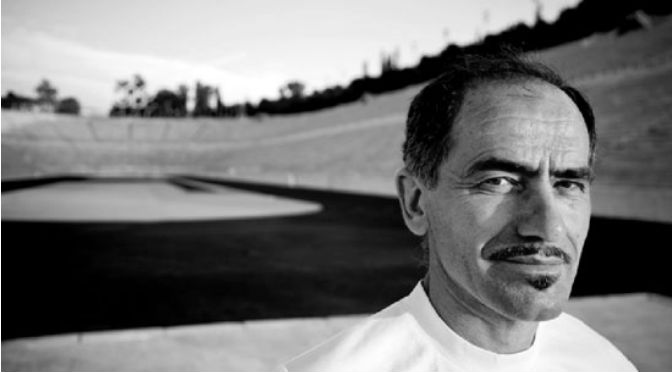
Running quote of the day
“When other people get tired, they stop. I DON’T. I take over my body with my mind. I tell it that it’s not tired and it listens.”
-Yiannis Kouros
Shocking Revelation on Why You Quit Exercise!
An excellent post by The Zeit on how our attitudes towards exercise shape our athletic gains!
A good reminder that we can never separate the physical from the psychological.

 Do You Really Know Why You Quit Exercise? photo by Ambro
You could be exercising and eating right and still not getting the results you should. You know why? The surprising answer could be that you are suffering from the “nocebo” effect. It’s the evil twin brother of the “placebo” effect.
View original post 666 more words
The best exercise ever: jumping rope.
Jumping rope prepares the body to interact with gravity and stress—making it the perfect precursor to running. It strengthens the connective tissue, solidifies the bones, develops the tendons, and teaches the muscles how to “talk” to each other through the stretch reflex.
Here’s how to do it right:

Most people jump rope incorrectly: they use their calfs as the major pushoff muscles. But then, why is it so ubiquitous?
Because it is neurologically a lot simpler to use two muscles than to use a lot of them.
Most people’s bodies never learned to use all their muscles in dynamic activities: parents prefer to keep their kids inside throughout their critical periods (1-6 years of age). The parental risk aversion that translates to a reduction in dynamic play impoverishes the brain’s sensorimotor opportunities. Simply stated, the brain never learned how to use all of the muscles together—it didn’t have to.
So the brain chooses the quick way out: it only uses the calfs.
But the calf muscles were never “designed” to push off (in the sense that the arm muscles were never “designed” to support the body while running). Their function is to make sure that the foot remains at the correct angle in relation to the ground throughout the landing and propulsion of all leg-based activities. In other words, the calf muscles are designed to effectively transfer the force from the quads and the glutes into the ground, not as pushing muscles.
If we use them to push off, we overload them—but more importantly we use the entire leg and hip system in a way that it was never meant to be used. And what does this translate to?
Calf muscle tightness.
To correct this, we need to train our muscles to interact correctly, and we need to make the brain realize that there is a way to use the most powerful muscles in the body, the quads and the glutes, as the main motors of propulsion. If we use the tiny calf muscles as our main pushing muscles, we will never become the fastest, most athletic version of ourselves.
Don’t confuse exercise with training!
Outside Magazine just came out with an article that talks about the difference between exercise and training. The contention is that exercise is more of a social activity, while training focuses on the development of the body.
The article cites an interview with Mark Rippetoe, the first coach to give up his National Strength and Conditioning Association credential. Rippetoe believes that one of the problems with the fitness industry is that they develop and market exercises to appeal to the consumer, not to develop the body—and worse yet, they either obscure this distinction intentionally, or are happy it remains in neglect.
I am excited that Outside Magazine is grappling with these distinctions, and promoting knowledge for the lay athlete. Because these marketing and social forces shape and ultimately define our training, our athletic development is at their mercy. The key to dealing with them is knowledge: by “trusting” in an exercise or a diet, we are sure to be playing to someone’s marketing scheme.
Ultimately, simplicity wins out—but it is impossible to market. There will never be an exercise better for developing aerobic power than endurance running. Since it is simplicity that makes it work, no amount of sophistication will do the trick. The same goes with strength: floor and barbell exercises are by and large all you need—and perhaps a simple weight such as a kettlebell.
So the fitness industry has no choice but to fabricate a story as to why so much variety and so much complexity is so important. Buying into this media machine means that while we look for ever more obscure and esoteric exercises, the athletes that keep it simple will be faster and stronger—and the reasons for their speed and power will remain completely obscure to us: the media veil that the fitness industry succeeded in putting over our eyes filters those reasons out of our awareness.
As Bruce Lee said:
“It’s not about the daily increase, but the daily decrease. Hack away at the unessential.”
He said this for a reason. It’s up to each of us to explore why.
Workouts don’t develop the body. Resting after them does.
I often hear fellow athletes and fitness enthusiasts bemoan that they missed a workout.
There’s a lot of reasons people have this attitude. Maybe someone’s counting calories, and they are too tired to burn their allotted amount today. Maybe they have a strict training plan, and they feel obliged to stick to it. Maybe someone’s worried that if they stop they’ll never go back because they’ve hated the workouts, hated the nutrition, and only do it for the looks—or the speed.
You can’t “miss” a day of training, especially if you’ve been training so much (or eating so little) that the reason you missed training today is because you’re exhausted. Continue reading Workouts don’t develop the body. Resting after them does.
An internet encounter with static stretching.
Yesterday, while I was browsing Facebook, I happened to click on a link that advertised the 30 best premium WordPress themes. Curious, I started to browse through the list, and I came upon one that I was curious about: “spartan,” which has a nice internet-mag style layout.
As I looked at the live preview—nothing fancy; just catchy headlines, stock images and lipsum text—I scrolled down and saw that one of the example articles had a headline that read: “Don’t forget to stretch after your workout!”
Continue reading An internet encounter with static stretching.
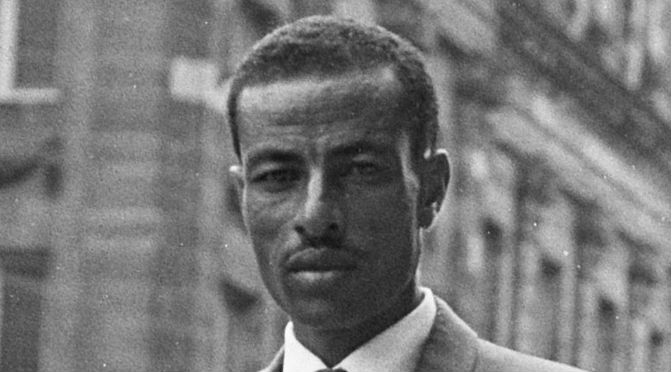
Running quote of the day
“I wanted the world to know that my country, Ethiopia, has always won with determination and heroism.”
– Abebe Bikila
 running in systems